
Spis treści
Australia introduces hours of free energy for households
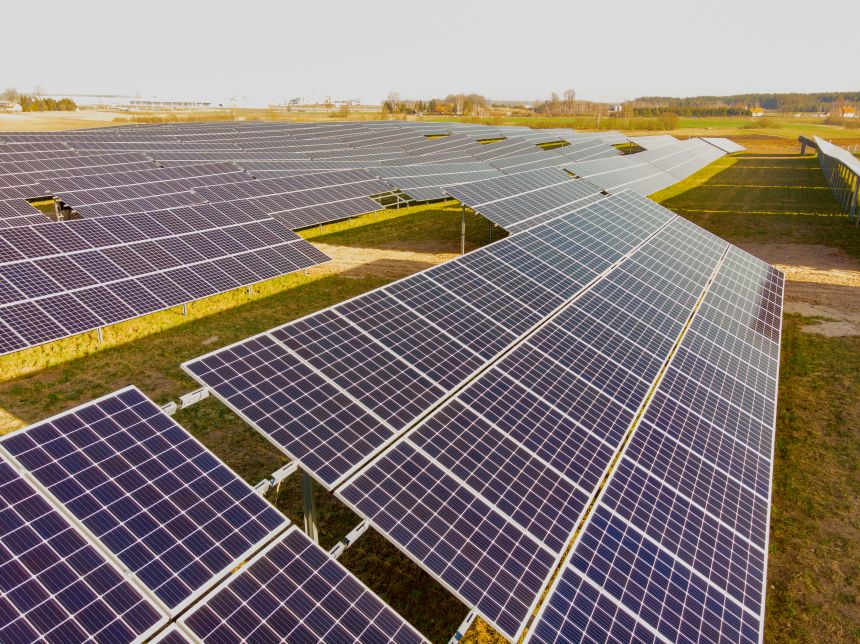
Under the newly announced “Solar Sharer” program, households in several Australian states will be able to use at least three hours of free electricity per day from mid-2026. The initiative aims to better utilize surplus solar energy and further reduce coal and gas consumption, Financial Times reports.

The newspaper notes that the program will force energy companies to offer households free daytime electricity. The goal is to significantly increase the use of energy generated by rooftop solar panels installed on more than 4 million homes.
Daytime electricity prices in Australia increasingly reach negative levels, driven by high residential solar production—far exceeding what households can consume.
To tackle this, the Australian government plans to require utilities to provide at least three hours of free electricity daily. The offer will be available to households equipped with smart meters.

The government argues that the availability of free electricity should convince many consumers to run energy-intensive appliances or charge electric vehicles during periods of high solar generation. It also expects the program to stimulate the installation of home energy storage, which will additionally be subsidized.
Energy storage would help flatten the evening demand peaks, reducing the need for coal and gas power plants. As a result, the “Solar Sharer” program is expected not only to cut household bills but also to support the decarbonization of Australia’s energy sector and its climate targets.
In Poland, the problem of weak correlation between solar production and demand also exists, though it covers fewer hours than in sunny Australia.
Financial Times notes that although some utilities already offer limited versions of such plans, the government’s proposal has been criticized by the industry, which claims it was not consulted.
Industry groups argue that the new rules could disproportionately hurt smaller retailers. Critics also warn that suppliers will likely try to compensate for free hours—for example, by raising prices during evening peaks.
The UK keeps its biomass safeguard at least into the next decade
The UK government has signed a new contract for difference with the biomass-fired Drax Power Station, covering 2027–2031. The controversial company is expected to earn nearly half a billion pounds per year, The Guardian reports.
Located in northern England, Drax once operated almost 4 GW of coal-fired units. Today it runs around 2.6 GW on wood pellets imported from North and South America. In 2024, the plant supplied about 5% of the UK’s electricity.
Drax has received government subsidies since 2012, when it began converting from coal to biomass. Although wind and solar have grown substantially since then, energy storage remains insufficient to balance weather-dependent renewables.
As a result, Drax’s dispatchable capacity is still needed for grid stability—much like gas plants. Debates on extending support for the plant have been ongoing since last year.
Controversy surrounds both the classification of biomass as renewable and Drax’s difficulty in proving the sustainability of its fuel. Journalistic investigations in recent years have highlighted irregularities. This year, after errors were found in Drax’s reports, both Ofgem and financial regulators launched probes.
Under the new agreement (April 2027–March 2031), support will cover around 6 TWh of electricity—roughly one-quarter of the plant’s operating time, compared with about two-thirds today. This aligns with the government’s plan to limit biomass use.
However, the inflation-indexed guaranteed price will rise to £157/MWh, up from today’s £142/MWh. According to think-tank Ember, Drax’s annual revenues under the new contract will be about £460 million, compared with £869 million in 2024.
The Guardian notes:
“Under the new terms, Drax will have to source 100% sustainable wood biomass, up from the current 70%. The government has threatened ‘severe penalties’ for non-compliance.”
How realistic are the gigawatts announced for new data centers?
The scale of data-center investments announced in the U.S. raises growing questions about how many of these plans are realistic and how many are speculation—especially given the enormous electricity demand that would arise if they were all built, writes Financial Times columnist Robin Wigglesworth.
He was commenting on the latest announcement from OpenAI, the company behind ChatGPT. Its next data center—1 GW—is planned for Michigan, bringing the total announced by the company to 8 GW.
According to OpenAI, this is not the end: the company intends to build 10 GW of capacity under its current investment plan, costing over $450 billion.
Wigglesworth notes that this is only part of the broader wave of investment triggered by the AI boom. According to Barclays, companies have already announced data-center plans totaling 46 GW, with costs around $2.5 trillion, even though the sector is not yet profitable.
What’s even more alarming, he argues, is the potential electricity demand if all these facilities were built and operated at full load. It could reach 55 GW—enough to power about 44 million U.S. households.
Such figures raise concerns about the impact on grid stability and electricity prices. The industry claims its needs will be met largely through new generation capacity—both conventional and renewable—as well as energy storage, often located adjacent to the centers.
Still, tech giants stress the need for accelerated energy-sector investment so that electricity supply does not become a bottleneck for AI development—especially in the context of U.S. competition with China.
Reflecting on the realism of AI “visionaries’” plans, Wigglesworth notes that OpenAI recently claimed the U.S. faces an “electronics gap” relative to China. He recalls that during the Cold War, Americans were warned about a supposed “missile gap” with the USSR, which turned out to be heavily exaggerated.
“Maybe this time, when all the AI hype subsides, at least we will be left with a more robust and stable power system,” he concludes.
China has become a superpower thanks to green-tech production
The combination of China’s massive manufacturing capacity and its insatiable appetite for cheap electricity has turned the country into a new kind of superpower—one that leverages clean energy on a global scale, writes The Economist.
The weekly notes that this form of influence differs significantly from the Cold War era, when superpower status depended largely on nuclear arsenals. Today, China can shape the global economy, energy markets, and climate policy through its mass production of green technologies.
“The main reason why many countries are still not decarbonizing their economies is the lack of affordable means to do so. And this is precisely what China is fixing. It supplies the world with ever-growing volumes of clean-energy equipment at prices lower than any alternative—including coal and natural gas,” The Economist writes, adding that China now earns more from exporting green technologies than the U.S. does from exporting fossil fuels.
Thanks to its production capabilities, China is approaching its climate goals—although progress would be faster if not for its continued reliance on coal. Still, after Donald Trump withdrew the U.S. from the Paris Agreement, Beijing’s global climate role increased significantly.
However, The Economist notes that China’s growing power raises concerns worldwide. Under Xi Jinping’s centralized rule, the government aggressively protects its interests abroad.
This has been illustrated by recent decisions to restrict the export of rare-earth metals and battery materials. Such actions undermine trust in Beijing. China could ease these concerns by moving more of its production offshore and ending practices that ultimately harm its own long-term trade prospects.